
Barry Manilow, the legendary singer behind hits such as Copacabana and Mandy, has revealed that he is unsure whether his signature singing voice will ever fully recover following lung cancer surgery. The 82-year-old music icon underwent a major operation in December to remove a cancerous tumor from his lung, forcing him to postpone multiple shows and his Las Vegas residency earlier this year as he focused on recovery.
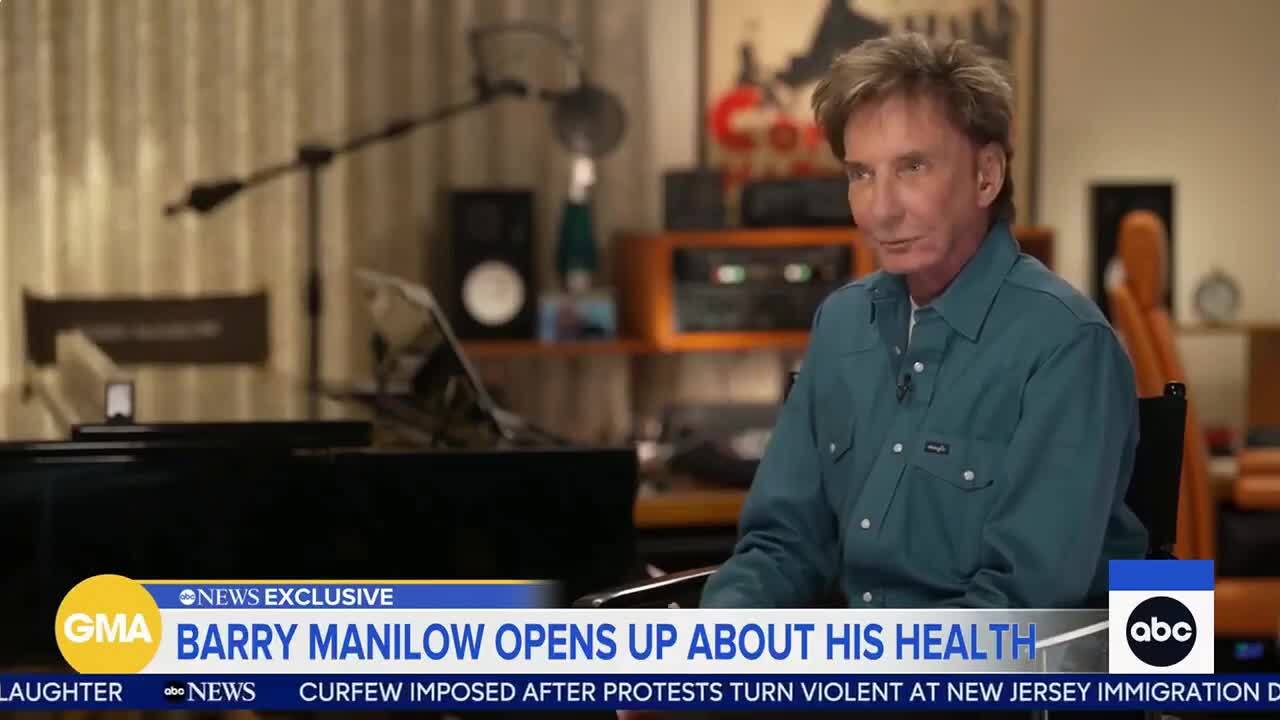 In a candid interview on Good Morning America, Manilow admitted the uncertainty of his vocal future has been emotionally challenging. “My voice, I don’t know whether it’s coming back. I did my first sound check about a month ago, and I didn’t sound like me at all. I just couldn’t believe that it’s over,” he said. The singer described the experience as “really upsetting because I don’t want to stop,” highlighting the profound personal and professional impact of the surgery.
Manilow recounted the moment he first realised something was wrong with his voice. “I looked at my band, and they were all looking at the floor. That was the first hint that something was not right. I’ve always taken my voice for granted. I don’t take it seriously. Now I do, because it doesn’t seem to be there the way it always was.” The uncertainty has forced the performer to confront a reality that few artists of his caliber face: the possibility that his most defining instrument — his own voice — may be compromised.
The operation itself, though successful in removing the tumor, was only the beginning of a prolonged recovery. Doctors determined that Manilow would not need chemotherapy or radiation, a fortunate outcome. However, he faced a severe complication when he contracted pneumonia, which led to a seven-day stay in the ICU. “I was in the ICU for seven days because they couldn’t grasp this pneumonia that was just about killing me,” he said. The ordeal added another layer of intensity to his post-surgery recovery, testing both his physical stamina and mental resilience.

“Using the treadmill three times a day was part of my preparation for upcoming arena tour dates,” Manilow explained. “But the surgeon advised against resuming concerts immediately. It was tough, but necessary.” The experience has given the Grammy-winning artist a renewed appreciation for his health and the fragility of a career built on vocal performance.
Manilow also reflected on the psychological impact of his diagnosis and recovery. Initially, he admitted to minimizing the seriousness of his condition. “When I was first told I had lung cancer, I paid no attention to it. It was just too heavy for me,” he said. His candidness offers insight into the emotional toll that life-threatening illnesses can have, even on seasoned entertainers accustomed to public scrutiny.
Despite these challenges, Manilow remains committed to his farewell tour, The Last Concerts, which is set to kick off on June 25. His summer tour dates are scheduled to run through December, followed by the conclusion of his Las Vegas residency in January 2027. For a performer whose career spans more than six decades, the tour represents both a celebration of achievements and a personal testament to resilience in the face of adversity.
Throughout his career, Manilow has released over 30 studio albums and produced multiple chart-topping singles. Classics such as Even Now, Can’t Smile Without You, Somewhere in the Night, and Mandy have become ingrained in pop culture, making his current uncertainty all the more poignant. Fans have long associated his voice with timeless hits, and the prospect of it being altered or diminished brings a mixture of concern and empathy from admirers worldwide.
“I’m in great shape, I’m ready to go. I just hope my voice is there. If I sound good, that would be just great!” Manilow added, reflecting the determination and hope that have characterised his career. The singer’s transparency about the physical and emotional challenges of recovery underscores both the vulnerability and strength of an artist confronting the limits of their body while maintaining a public persona.
The months since surgery have been transformative for Manilow. From the ICU stay to ongoing vocal rehabilitation, he has navigated obstacles few performers encounter. Yet, despite the uncertainty, he remains optimistic about performing for fans one last time, emphasizing his love for music and gratitude for decades of artistic success.
Manilow’s journey offers a reminder of the fragility of human ability, even among those who have long been considered icons. His openness about the fear of losing his voice, combined with continued dedication to his craft, resonates as an inspiring example of perseverance. For fans, the narrative is both a cautionary tale and a testament to the resilience that defines his life and career.
 Looking ahead, Barry Manilow’s farewell tour promises to be a poignant experience for audiences, blending celebration, nostalgia, and the raw emotion of a performer confronting personal and professional uncertainty. As he prepares to step back into the spotlight, the singer’s story continues to captivate, reminding us all of the power of music, the impermanence of health, and the courage required to continue doing what you love against the odds.
Source: The Independent


