
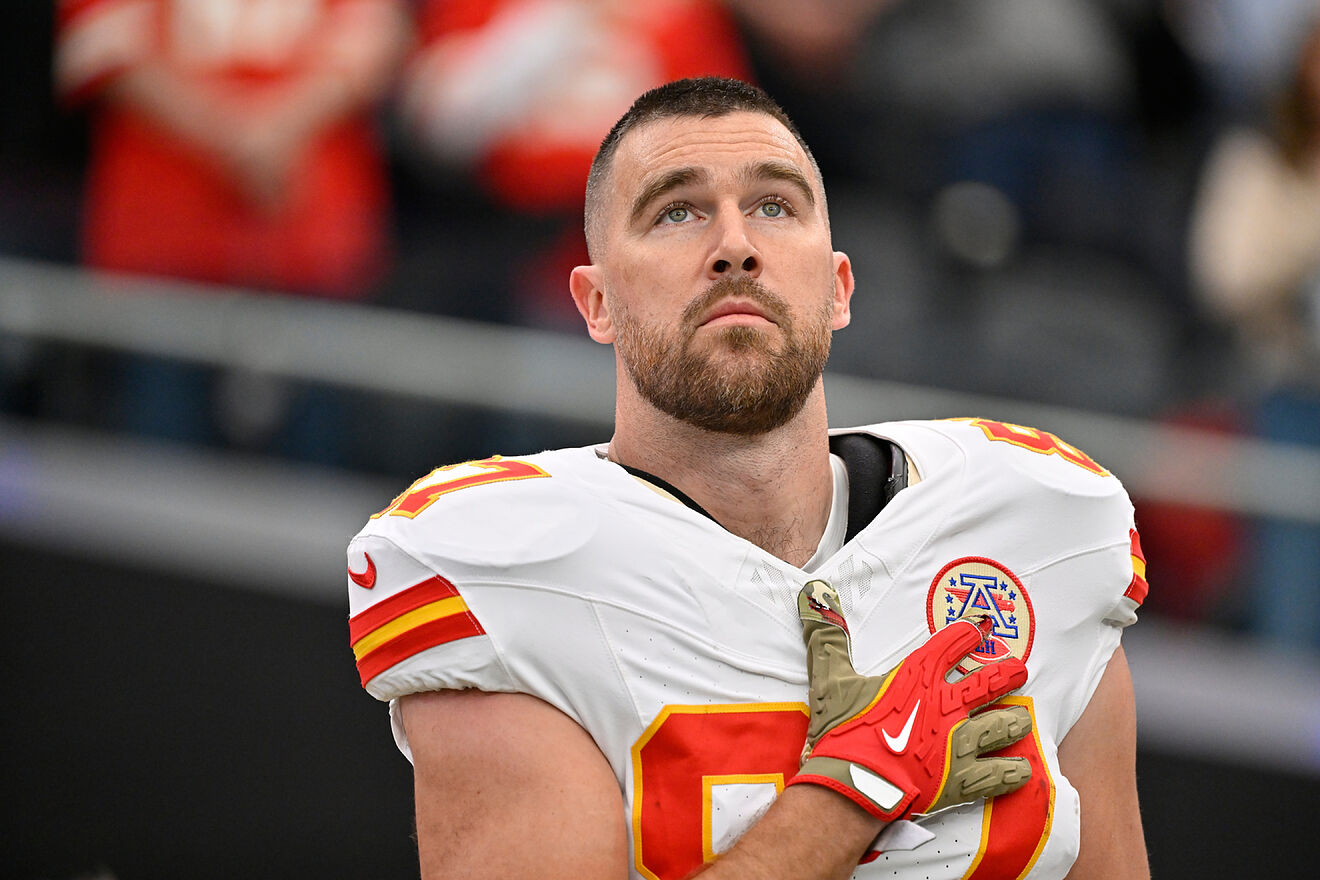
 Before becoming one of the NFL’s most iconic tight ends and a cornerstone of the Kansas City Chiefs’ offense, Travis Kelce’s future was uncertain. In fact, he almost traded in his football cleats for a basketball jersey. Kelce, 36, revealed in a recent New Heights podcast episode that a 2007 recruitment visit to West Virginia University almost led him down a different path—one that would have taken him to the world of Division I college basketball instead of honoring his football commitment to the University of Cincinnati.
 A Crucial Decision: Basketball or Football?
Kelce shared how the West Virginia University (WVU) recruitment trip had a profound impact on him. He was treated with unprecedented attention, something he felt he hadn’t experienced at Cincinnati, where he was often overshadowed as Jason Kelce’s younger brother. Reflecting on his experience, Travis said, “You guys treat me like family, like I had never been treated before. I was Jason Kelce’s little brother in Cincinnati, didn’t even give me this much attention.”
On returning from the WVU visit, Kelce confided in his father, telling him that he was seriously considering pursuing college basketball. “I think I want to really give myself a chance at playing Division One college basketball and play for Coach Huggins,” he said, referring to the legendary WVU coach Bob Huggins.
However, Travis Kelce’s father, Ed Kelce, had a different perspective. He didn’t mince words when he responded, “You are a man of your word. You want to be like these kids who commit to a university and then decommit. And now the integrity of your word doesn’t mean anything.” His father’s stern but valuable advice left a lasting impact, and Kelce ultimately honored his commitment to Cincinnati and stayed with football, a decision that would go on to shape the future of the Kansas City Chiefs franchise.
 Kelce’s Admiration for Coach Huggins
While Kelce was ultimately swayed by his father’s words, he expressed a deep admiration for Coach Huggins and the way he ran his basketball program. “I fell in love with how Coach Huggins ran his program and knew he was the kind of coach that I would respect and want to play for,” Kelce admitted. Despite his love for basketball, the pull of honoring his word and remaining loyal to football prevailed.
Kelce’s decision to stick with football would later prove to be one of the most important choices of his life. His commitment to football paved the way for him to become a franchise legend with the Chiefs, though his journey to the NFL was far from straightforward.
 Overcoming Setbacks: From College Suspensions to NFL Stardom
Kelce’s road to the NFL wasn’t without its challenges. In college, he found himself suspended after failing a drug test, which resulted in him being temporarily removed from the team. Reflecting on this pivotal moment, Kelce said, “I got kicked out of college because of it. I partied a little too much down there, got hit with a drug test and from that point on, I realized I gotta tighten the f**k up.”
This suspension was a turning point for Kelce, pushing him to fully embrace the tight end position and focus on his future in football. Originally playing both quarterback and tight end, Kelce’s shift to solely tight end following the suspension marked the beginning of his rise to stardom. His older brother, Jason Kelce, played a critical role during this time, advocating with coaches to keep Travis on the roster despite his struggles. This intervention was key in ensuring that Kelce stayed with the program and eventually thrived at the tight end position.
 A Historic NFL Career
Kelce’s journey from college uncertainty to NFL superstardom is nothing short of remarkable. Drafted by the Kansas City Chiefs in the third round of the 2013 NFL Draft, he went on to become one of the most dominant players in the league. Over his 13-season career, Kelce has recorded 1,080 receptions for 13,002 yards, 82 receiving touchdowns, and two rushing touchdowns.
But Kelce’s impact extends beyond just statistics. Chiefs General Manager Brett Veach emphasized Kelce’s influence on the team, noting, “It’s a business, and it’s cutthroat, but just uplifting people around you. You could go in there with an attitude of, ‘We’re in this together, and we’re going to uplift each other.’ He puts a smile on someone’s face every single day.”
Kelce’s blend of talent, leadership, and perseverance has made him one of the NFL’s all-time greats. His journey from a college suspension to a Hall of Fame-caliber career is a testament to his resilience and his ability to overcome personal setbacks.
A Legacy of Integrity and Leadership
Looking back on his career, it’s clear that Kelce’s decision to honor his commitment to football was pivotal not just for his personal development but for the future of the Kansas City Chiefs. Without his father’s advice and his brother’s support, it’s possible that the Chiefs’ offense would not have been shaped by one of the greatest tight ends to ever play the game.
Kelce’s story is a powerful reminder of the importance of integrity and leadership in shaping a successful career. It was his father’s insistence on the integrity of his word and his brother’s unwavering support that helped him stay on the path that led him to the NFL. Now, Chiefs fans are witnessing the results of that path, as Kelce continues to be a cornerstone of the team, with his leadership extending beyond the field.
Conclusion: A Career Shaped by Integrity
The story of how Travis Kelce almost switched from football to basketball, and the pivotal moment when his father stopped him from making that decision, is one of the most defining moments in his career. It highlights the role of integrity, commitment, and the influence of family in shaping not only Kelce’s career but also the success of the Kansas City Chiefs.
Today, as Kelce continues to make NFL history, it’s clear that his journey has been about much more than physical talent. It’s about making the right choices, staying true to his word, and leading by example—qualities that have made him a legend in Kansas City and across the NFL. Without those early interventions from his father and brother, the Chiefs might never have had the opportunity to witness the emergence of one of the greatest tight ends in league history.


