
Kemi Badenoch Criticizes Keir Starmer’s Approach to Energy Companies, Accusing Labour of Losing Influence
Kemi Badenoch has sharply criticized Keir Starmer’s handling of energy companies, claiming that his confrontational stance has left Labour with “very little capital” in negotiations with the sector. Speaking during a visit to the Port of Aberdeen, Badenoch suggested that Starmer’s ongoing criticisms of energy companies have weakened Labour’s position in vital discussions about the UK’s energy future.
During the visit, which included a tour of the Well-Safe Protector rig at Aberdeen South Harbour, Badenoch was joined by Scottish Conservative leader Russell Findlay. The pair outlined the Conservative Party’s plan to reinvigorate North Sea oil and gas extraction, a key component of their strategy to ensure greater energy security for the UK amid rising prices and global instability.
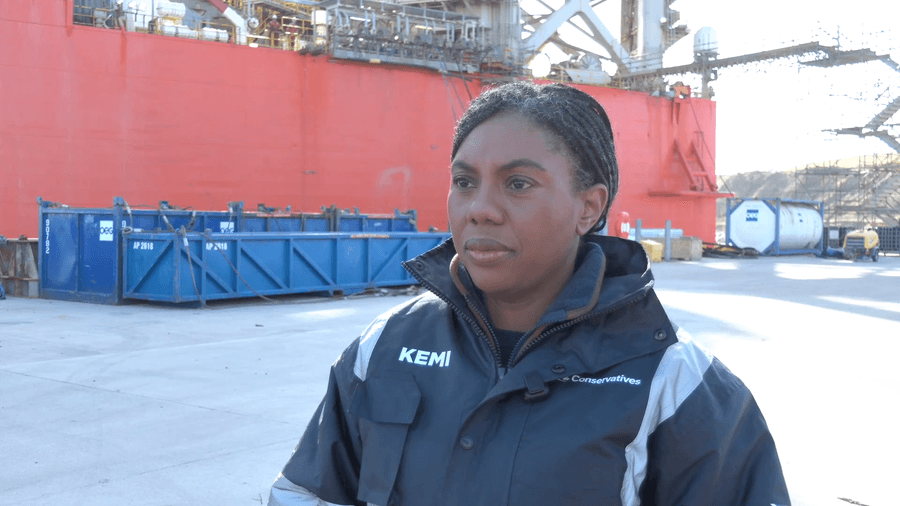
Badenoch emphasized that the Labour Party’s approach, which she described as largely critical of energy companies, has significantly undermined their influence over the energy sector. “Keir Starmer and the Labour Government have spent much of their time being negative towards energy companies,” she said. “This has left them with very little leverage when meeting with energy executives. Labour no longer has the negotiating power it once had.”
The Conservative energy plan includes a proposal to remove VAT from domestic energy bills for the next three years, offering £94 in savings for average households. In addition, the plan aims to cut carbon taxes on electricity production and eliminate subsidies for wind energy. However, the central feature of the Conservatives’ energy policy is a push to increase oil and gas production in the North Sea, with a focus on accessing the 2.9 million barrels of oil available beneath the seabed.

Badenoch argued that oil and gas are necessary for a range of reasons, including energy security, job creation, and generating tax revenue. She also pointed out that the UK’s current reliance on imported energy is problematic. “We need oil and gas for security of supply, for jobs, and for tax revenues,” she explained. “We’re importing energy from countries that do not produce it as cleanly as we do here in Aberdeen.”
In her comments, Badenoch also stressed that renewable energy and fossil fuels need not be mutually exclusive. She argued that embracing both would help address the UK’s long-term energy needs. “Over the past 14 years of Conservative Government, we have made significant strides towards carbon neutrality,” she stated. “Renewables and oil and gas can, and should, coexist as part of a balanced energy strategy.”


