
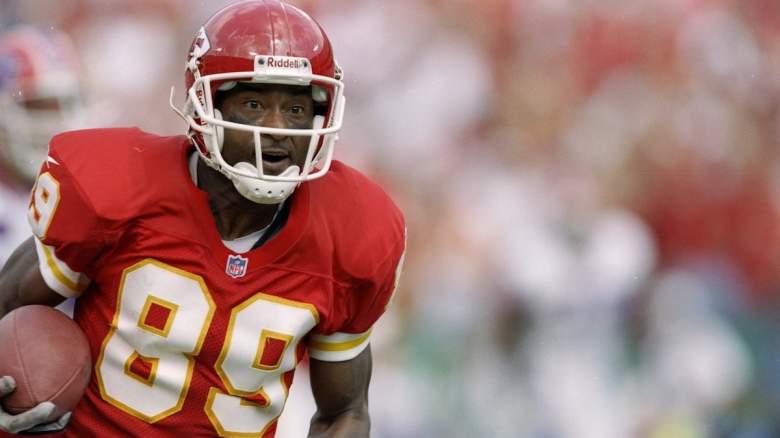
 Former Kansas City Chiefs wide receiver Andre Rison has begun serving a court-ordered jail sentence after pleading guilty to a second operating-while-intoxicated offence in Michigan.
The five-time Pro Bowler was booked into the Oakland County Jail on Friday evening, June 12, and was expected to remain behind bars until Sunday.
Although initial reports described the development as a new jail booking, records reportedly show that Rison was not arrested on a fresh criminal allegation.
Instead, the 59-year-old is serving a sentence connected to an August 2025 incident in Troy, Michigan.
 Guilty plea followed 2025 incident
Court records obtained by TMZ Sports reportedly show that Rison pleaded guilty to second-offence operating while intoxicated, commonly known as OWI in Michigan.
The charge is the state’s equivalent of driving under the influence.
As part of the sentence, Rison received a weekend in jail, 18 months of probation and more than $2,300 in fines and court costs.
A separate open-intoxication charge was reportedly dismissed during the proceedings.
Second OWI offences carry more serious penalties than first violations under Michigan law, including the possibility of mandatory jail time and greater restrictions on driving privileges.
Rison’s attorney had reportedly not responded to requests for comment as of Saturday.
 Three seasons with Kansas City
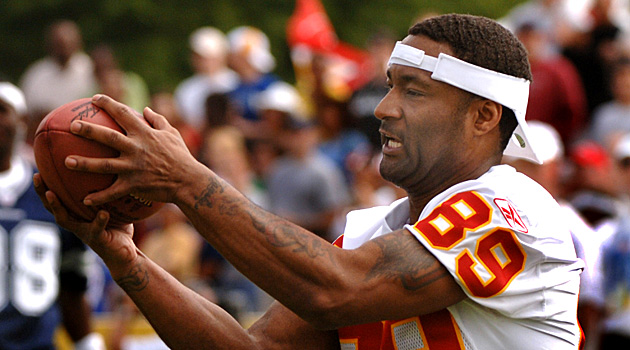
Rison played for the Chiefs from 1997 through 1999 during the final stage of an accomplished 12-year NFL career.
Known for his speed, confidence and ability to produce spectacular plays, the receiver became one of the league’s most recognisable offensive stars during the 1990s.
He recorded 743 receptions for 10,205 yards and 84 touchdowns across 186 regular-season games.
Rison also earned five Pro Bowl selections and finished his career with a Super Bowl championship.
His time in Kansas City included productive seasons in which he remained a dangerous target despite already having played for several teams.
He later completed his NFL career with the Oakland Raiders.
Super Bowl hero with Green Bay
One of Rison’s most memorable moments came while playing for the Green Bay Packers during their championship-winning 1996 season.
On Green Bay’s opening drive in Super Bowl XXXI, quarterback Brett Favre connected with Rison for a 54-yard touchdown against the New England Patriots.
The early score helped the Packers take control before securing the franchise’s first Super Bowl title in nearly three decades.
Rison had joined Green Bay late in the season but immediately became an important contributor during the playoff run.
The championship remains one of the defining achievements of his career.
College star at Michigan State
Before entering the NFL, Rison starred at Michigan State University.
The Indianapolis Colts selected him with the 22nd overall pick in the 1989 NFL Draft.
After one season in Indianapolis, he was traded to the Atlanta Falcons, where he developed into one of football’s most productive receivers.
Rison posted five consecutive seasons with at least 1,000 receiving yards and earned four straight Pro Bowl selections during his time in Atlanta.
He later represented the Cleveland Browns, Jacksonville Jaguars, Packers, Chiefs and Raiders.
His combination of athleticism and personality helped make him a prominent figure during an era filled with elite wide receivers.
Previous legal troubles
The OWI sentence is the latest entry in a lengthy record of off-field legal issues involving the former NFL player.
In 1993, Rison was arrested following an altercation involving his then-girlfriend, TLC singer Lisa “Left Eye” Lopes.
Aggravated-assault charges connected to that incident were later dismissed.
The couple’s relationship became the subject of international attention the following year when Lopes set fire to Rison’s shoes following an argument at his Georgia home.
The flames spread and destroyed the mansion.
Lopes pleaded guilty to arson and received five years of probation.
Rison publicly supported her at sentencing, and the couple later reconciled.
Their on-and-off relationship continued until Lopes died in a car crash in Honduras in 2002.
Kansas City nightclub arrest
While playing for the Chiefs in 1999, Rison was among several people arrested following an altercation at a Kansas City nightclub.
He was charged with disorderly conduct.
A separate case in Kansas involved a rented audio recorder that authorities said he failed to return.
That matter ended with a no-contest plea and one year of probation.
Rison has also faced legal proceedings connected to unpaid child support and probation violations.
A federal arrest warrant was issued in 2016 over an alleged violation before he agreed to surrender.
He later pleaded guilty to another probation violation in 2020 and was warned that additional violations could lead to imprisonment.
Booking is not a new criminal case
The distinction surrounding Rison’s latest jail stay is important.
The Oakland County booking does not appear to represent a new criminal case or an accusation that he committed another offence this month.
He is serving a sentence already imposed after his guilty plea in the 2025 OWI proceedings.
That means Rison was not awaiting trial when he entered the jail on Friday.
He was completing the custodial portion of his punishment before beginning or continuing the probationary requirements attached to the case.
A complicated legacy
Rison’s football achievements remain substantial.
He surpassed 10,000 career receiving yards, scored 84 touchdowns, earned five Pro Bowl selections and contributed to a Super Bowl victory.
At his best, he was one of the NFL’s most dangerous and entertaining wide receivers.
However, his post-playing years have repeatedly been overshadowed by financial disputes, probation cases and other legal problems.
The latest sentence adds another troubling chapter to that complicated history.
Rison is expected to leave the Oakland County Jail after completing the court-ordered weekend term.
But his case will not end with his release.
He must still complete 18 months of probation, pay thousands of dollars in fines and comply with any additional conditions imposed by the Michigan court.


