
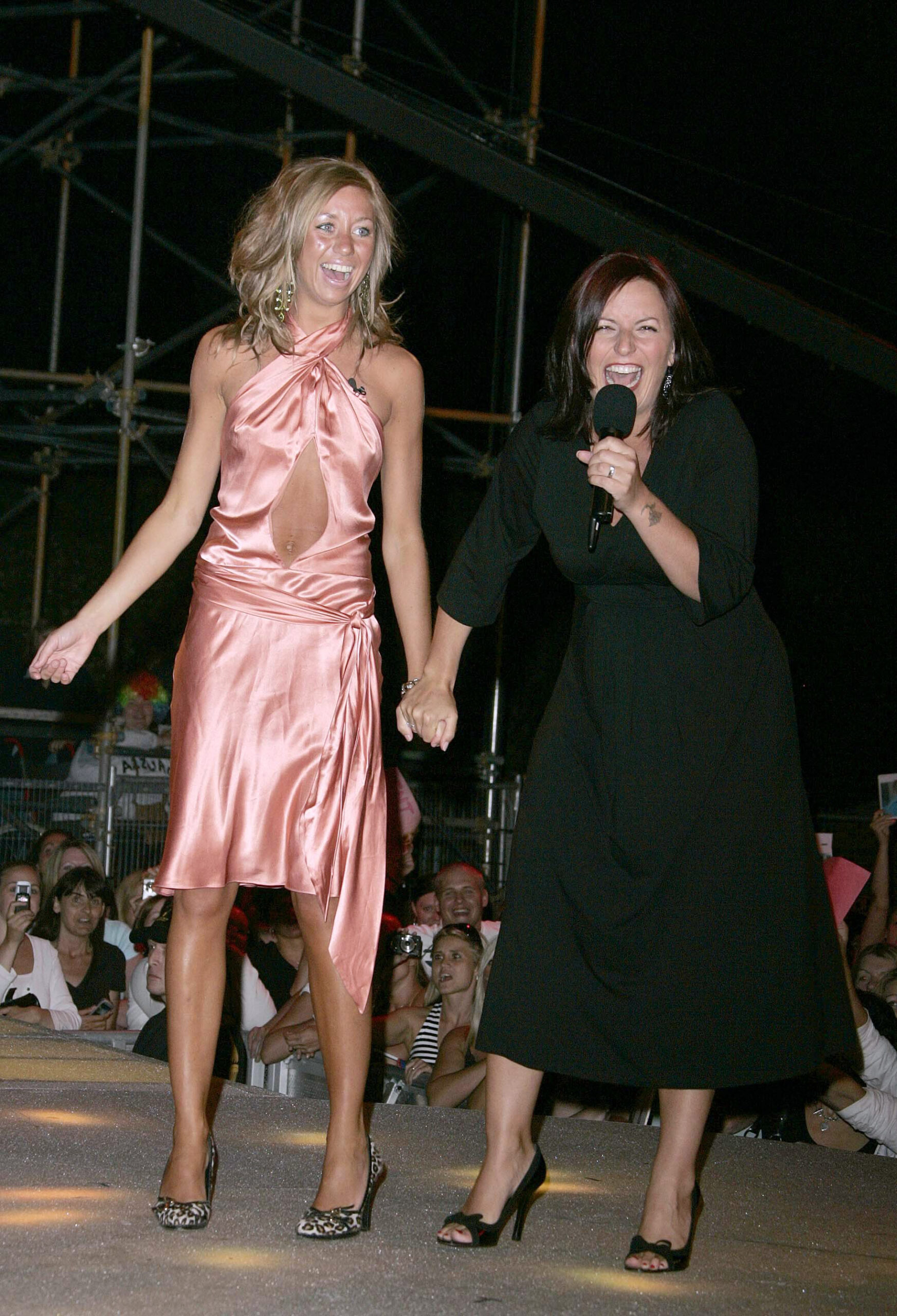
Nearly two decades after her time on Big Brother, Grace Adams-Short has sensationally called out host Davina McCall, claiming the presenter was “never friendly” and branding her a “Big Brother b***h.” Grace, who appeared on the 2006 series alongside the late Nikki Grahame, spoke candidly about her experiences during and after her 31-day stay in the house, revealing that her clashes with McCall have left a lasting mark.
Grace left the house in 2006 and later married fellow contestant Mikey Dalton. The couple now share four children, yet Grace admits the memory of her interactions with McCall remains vivid nearly twenty years later. “Even during my eviction interview, I could tell she didn’t like me. And I’ve never crossed paths with her again,” Grace told Betway, highlighting the tension that persisted behind the camera.
While McCall’s attitude left her frustrated, Grace recalled other hosts of Big Brother spin-offs with fondness. Dermot O’Leary, who hosted Big Brother’s Little Brother at the time, impressed her with his kindness. “Dermot, on the other hand, was lovely,” she explained. “The nicest, most genuine guy. I had to spend a week with him after leaving the house, and he even stopped his taxi on Regent’s Street once because he saw me. He was always so lovely to my mum, too.”
 Similarly, Rylan Clark, who presented Big Brother’s Bit on the Side, earned Grace’s praise. “Rylan is such a great guy also,” she said. “I met him years ago—this was before X Factor, when he still had ginger hair. He told me he was a huge fan of my series, and despite all the success he’s achieved since, he’s remained so lovely.”
Grace’s critique wasn’t limited to the hosts. She also reflected critically on the evolution of reality television itself. “Big Brother has lost its appeal – which you can see from the viewing figures,” she remarked bluntly. “It has lost its appeal since the glory days. Everyone has become too savvy about what they want to get out of a reality show.”
In contrast to her 2006 experience, Grace pointed out that today’s reality stars often pursue fame as a strategic goal. “When I was on Big Brother, it felt like 15 minutes of fame before returning to your normal life. Now, people want to go on shows like Love Island to get famous. It’s too calculated.” She added that casting changes have also diluted the authenticity of reality shows: “Big Brother used to select a great group of characters who were entertaining but still felt like normal people. I don’t think reality casts nowadays feel like average people anymore, and that gets boring to watch.”
Grace’s comments reveal a broader critique of the reality TV industry, emphasizing how personal dynamics, casting decisions, and presenter behaviour can influence both the viewing experience and participants’ memories. Her frank observations offer rare insight into how former contestants perceive the personalities running these shows, highlighting disparities between on-screen personas and behind-the-scenes reality.
Despite the criticism, Grace made it clear she distinguishes between hosts. While McCall received sharp remarks, she repeatedly praised the professionalism and warmth of O’Leary and Clark, illustrating how individual presenter approachability can shape participants’ experiences. Her anecdotes about Dermot stopping his taxi and treating her family kindly contrast starkly with her recollections of McCall’s attitude.
Grace’s revelations also underscore how public figures’ reputations persist over time. Two decades later, she vividly recalls the tension and perceived hostility, indicating the long-lasting impact that presenter interactions can have on contestants. For viewers, this provides a behind-the-scenes perspective on how reality TV is experienced differently by stars versus the audience.
 Meanwhile, Grace’s life beyond Big Brother reflects her enduring connection to the show. Married to fellow contestant Mikey Dalton, she has built a family of four children, yet she openly discusses the challenges and tensions from her reality TV experience. By revisiting the past, Grace sheds light on how fame, media representation, and personality clashes intersected during her formative experiences on national television.
Her critique resonates with fans of Big Brother, who have also observed changes in the genre over the years. By contrasting her experience with contemporary reality programming, Grace highlights shifts in contestant motivations, casting strategies, and audience engagement. These observations invite reflection on how the industry has evolved, and how viewers’ expectations of authenticity continue to shape reception.
The timing of Grace’s comments is notable, coming as Big Brother continues to run on UK television and streaming platforms. While some may see her remarks as a personal vendetta, others view them as a candid exposé of the pressures and challenges faced by reality TV participants, particularly regarding interactions with high-profile hosts.
Grace’s blunt assessment of Davina McCall as “unfriendly” and a “Big Brother b***h” stands out against her generous praise for other presenters, underscoring the role individual personalities play in shaping contestant experiences. These recollections invite discussion about the dynamics between hosts and participants, including the balance of authority, empathy, and professionalism expected in live and pre-recorded reality television.
As reality TV has grown in popularity and scale, Grace’s reflections offer a historical lens, emphasizing how participant treatment and showcasting influence public perception. By contrasting past and present, she underscores the importance of fairness, respect, and authenticity, suggesting that modern shows risk losing the relatability that originally drew audiences.
The episode of candid reflection also reveals the enduring cultural significance of Big Brother. Even years after her participation, Grace’s experiences continue to spark conversation, showing how reality TV can leave an indelible mark on contestants’ lives. Her comments remind viewers that behind the entertainment, complex interpersonal dynamics and long-lasting impressions shape the reality television narrative.
ED! has reached out to Davina McCall’s representatives for comment on Grace’s statements, but no response has been recorded at the time of publishing. In the meantime, fans and followers continue to debate the legitimacy and intensity of Grace’s remarks, reflecting wider interest in the personal stories behind television fame.
 Grace’s insight into spin-off presenters, her reflections on casting choices, and her critique of the evolution of reality TV offers readers a multi-layered look at both nostalgia and industry critique. By recounting her own journey, she positions herself as both a witness and commentator on the trajectory of reality television over the past two decades.
Ultimately, Grace Adams-Short’s scathing remarks about Davina McCall, balanced by praise for other hosts, provide a rare glimpse behind the scenes, revealing how former contestants perceive, remember, and evaluate the personalities and practices of those guiding their television experiences. For fans, these revelations offer entertainment, insight, and a renewed discussion on the impact of personality, professionalism, and perception in shaping the world of reality TV.
Source: Entertainment Daily UK


