
Keir Starmer Refuses Permission for US Strikes on Iranian Civilian Infrastructure
In a dramatic development, UK Prime Minister Sir Keir Starmer has refused to grant permission for the United States to use British airbases to target Iran’s civilian infrastructure. This move comes as President Donald Trump threatens to “unleash hell” on Iran, including a plan to target the country’s bridges and power plants.
The clash between the US and UK positions is escalating, with the UK government previously allowing the US to use British bases for defensive missions aimed at dismantling Iran’s missile capabilities. The use of RAF bases, such as RAF Fairford and Diego Garcia, has been approved for specific, defensive operations but has now been restricted from targeting civilian structures.
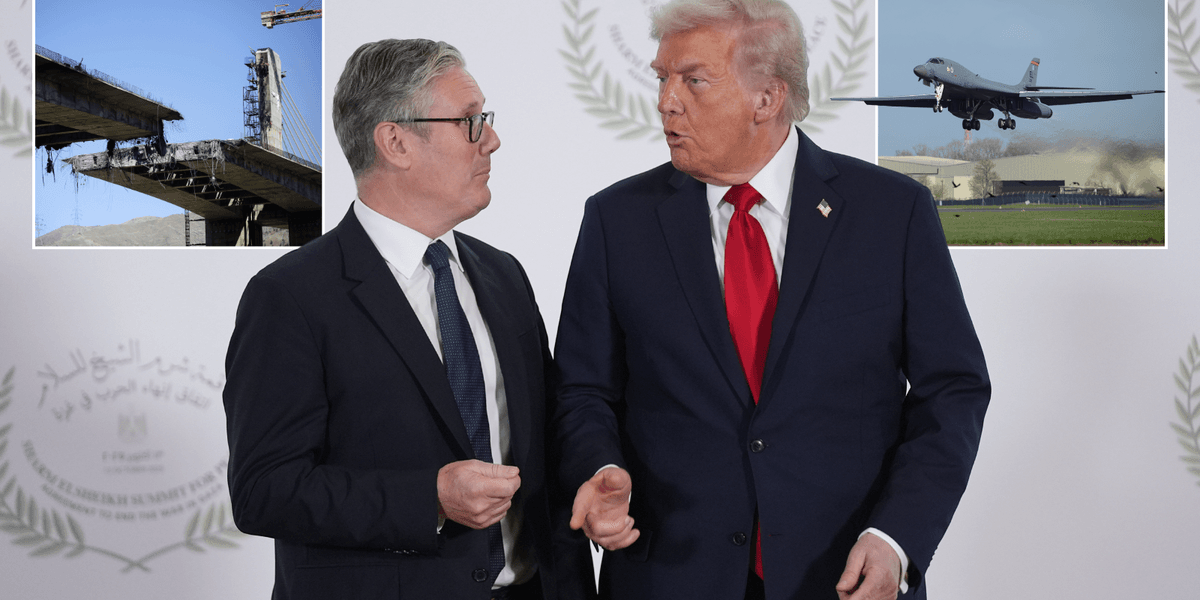
Trump’s ultimatum, delivered earlier this week, includes the destruction of all major bridges and power plants in Iran unless the country meets US demands. The strikes, which Trump has dubbed “Power Plant Day” and “Bridge Day,” could begin as soon as Tuesday, targeting civilian infrastructure across Iran. The President has been adamant that such actions would continue unless the Iranian government shuts down its nuclear program and ceases the development of ballistic missiles.
The Prime Minister’s decision follows a series of diplomatic exchanges, with Starmer making clear that only defensive military operations would be allowed from British bases, including those designed to neutralize missile threats. “We cannot, and will not, allow strikes on civilian infrastructure,” a Downing Street spokesperson confirmed.
A Growing Global Concern
This policy shift comes as the international community debates the legality of Trump’s aggressive stance. Critics argue that targeting civilian infrastructure would constitute a war crime, a charge Trump has vehemently denied, dismissing it as irrelevant in the face of Iran’s nuclear ambitions. The US president has also taken aim at the UK government, comparing Starmer to Neville Chamberlain, the British Prime Minister known for his appeasement strategy before World War II.
The US’s refusal to abandon plans for these strikes, despite growing concerns from international law experts, has intensified the debate about the role of NATO allies and the legitimacy of such extreme measures.

Political Fallout in the UK
The diplomatic rift has sparked a backlash in the UK, with critics of Starmer’s decision claiming that it undermines the country’s commitment to its allies. Foreign Affairs Committee member Richard Foord MP expressed concerns over the possible fallout, warning that such military actions could risk turning Iran’s enemies into allies. He also stated that “the rules of engagement are designed to protect civilians and prevent unnecessary escalation.”
As of now, no formal request has been made by the US to target Iranian bridges or power plants from UK bases. The situation remains fluid, and both countries’ leaders continue to navigate the complex web of international diplomacy.
While Starmer’s firm stance aligns with UK legal and humanitarian interests, it remains to be seen how the US will proceed and whether further tensions will arise in the US-UK relationship. The global community is closely watching how this diplomatic challenge unfolds.


