
The United Kingdom has been plunged into fresh Eurovision misery after Look Mum No Computer finished dead last in the 2026 grand final — sparking a furious backlash from viewers who branded the result a “national embarrassment.” 💔

Musician Sam Battle, performing under his quirky stage name Look Mum No Computer, represented the UK with his eccentric entry Eins, Zwei, Drei in Vienna on Saturday night. But while the performance was clearly designed to be bold, strange and unforgettable, it failed spectacularly to connect with voters. The UK received just one point from the jury and a devastating zero from the public televote, leaving Britain at the very bottom of the scoreboard once again.
It marked another bleak chapter in the UK’s modern Eurovision history — and its third last-place finish since 2020. As Bulgaria celebrated a shock victory in Austria, British fans were left asking the same painful question: where did it all go wrong?
Sam’s performance was certainly not forgettable. Dressed in a pink boiler suit, he bounded around a mock workshop set while playing a synthesiser, surrounded by fur-clad robots with computers on their heads. It was chaotic, colourful and deliberately bizarre — a full-throttle attempt to embrace Eurovision’s weirdest instincts. ⚡
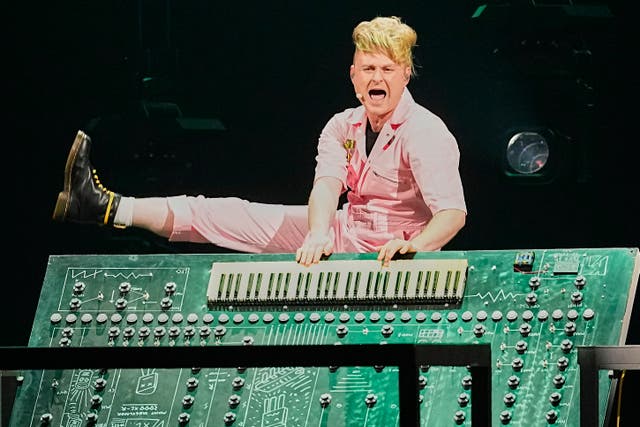
But for many viewers at home, the risk did not pay off. Social media erupted almost instantly, with fans calling the song “the worst” UK entry they could remember and claiming it felt as though Britain was “trying not to win.” Some went even further, insisting the act deserved nil points and demanding that everyone involved in choosing the entry be removed from the process.
One viewer joked that if Britain could award itself zero points, it would. Another raged that the UK, a nation that has given the world The Beatles, Queen, Adele, Elton John, George Michael and The Rolling Stones, somehow arrived at Eurovision with a novelty act that managed only one point.
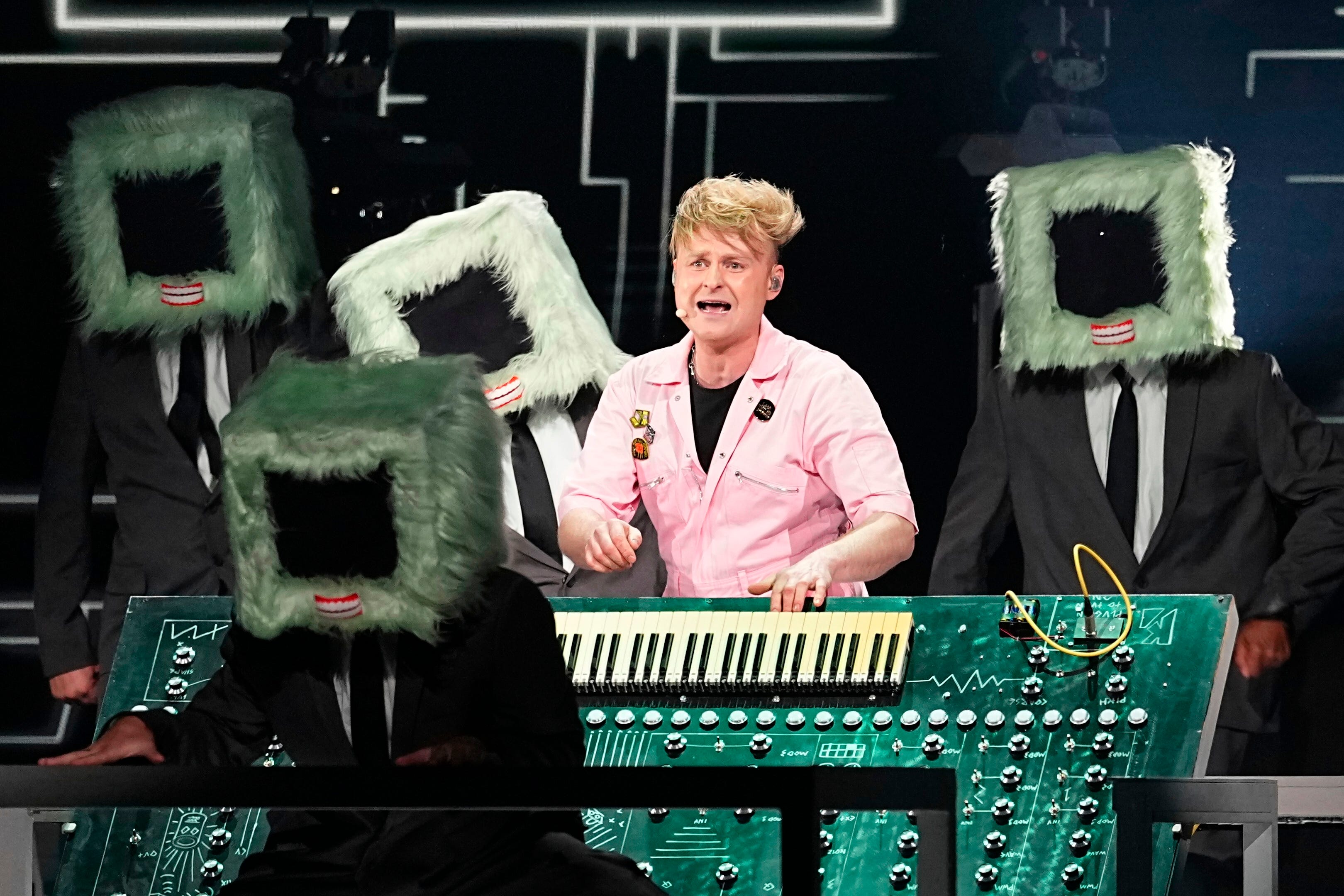
The humiliation was made even more painful by footage that emerged during the jury show, showing Sam apparently sitting alone in the UK booth before members of the Danish delegation invited him to join them. The clip quickly went viral, with fans calling it “sad” and “shameful” while accusing the UK delegation of failing to support its own act. 😟
Before the contest, Sam had admitted his entry would be divisive, calling it “Marmite” and saying people would either love it or hate it. Unfortunately for Britain, the final result suggested far too many voters fell into the second camp.
Yet the backlash has also reignited a bigger debate about why major British artists rarely agree to compete. Fans questioned why Australia could send an established star such as Delta Goodrem — who finished an impressive fourth — while the UK continues to struggle to attract household names. Delta’s polished performance was widely praised, while Britain’s entry became a punchline.

But others pointed out that Eurovision can feel like “career suicide” for established UK acts. Will Young previously called it a “poisoned chalice,” while Olly Murs has said the competition is not for him. The warning signs were clear after Olly Alexander represented the UK in 2024. Despite having major success with Years & Years, two No. 1 albums and multiple BRIT nominations, his song Dizzy received zero public votes and finished 18th overall.
That result left many artists wary. Eurovision may offer global exposure, but for a British star, it can also bring brutal public judgement, political backlash and the risk of being remembered not for a career, but for one humiliating scoreboard moment. 🎤
Still, critics argue that fear is exactly what holds the UK back. While other countries proudly send major stars, Britain often seems trapped between novelty entries, cautious choices and public cynicism. Bulgaria’s winning singer Dara, already an established pop star in her home country, reportedly urged UK artists to stop looking down on Eurovision and embrace the risk.

Some British fans, however, continue to argue that the contest is no longer purely about music. They claimed the UK could send a superstar and still struggle, blaming politics, Europe’s attitude toward Britain and years of damaged goodwill. Others urged the UK to quit altogether, asking why the country keeps paying to be humiliated.
The 2026 contest was also overshadowed by political tension, with several countries boycotting over Israel’s participation and pro-Palestinian protests taking place in Vienna. Against that fraught backdrop, Eurovision once again became about far more than songs.
But for the UK, the verdict was painfully simple. One point. Last place. No public support.
And after another night of scoreboard shame, British Eurovision fans are left wondering whether the country needs a total rethink — or whether the glittering contest has become a stage where the UK simply cannot win. 🌧️


