
Starmer Breaks With Trump Over Hormuz Blockade as UK Warns Britons Will “Pay the Price”
Prime Minister Keir Starmer has signalled a sharp divergence from Donald Trump after confirming that Britain will not support the United States’ military blockade of the Strait of Hormuz.
The warning comes just hours before Washington moves to shut down one of the world’s most critical oil transit corridors — a move Starmer says risks pushing energy prices higher and placing the financial burden squarely on British households.
Speaking to the BBC, the Prime Minister made clear that the UK’s strategy is focused on reopening the vital waterway rather than enforcing the American-led blockade.
“We are not supporting the blockade,” Starmer said, emphasising that Britain’s diplomatic and military resources are being directed towards maintaining open shipping lanes.
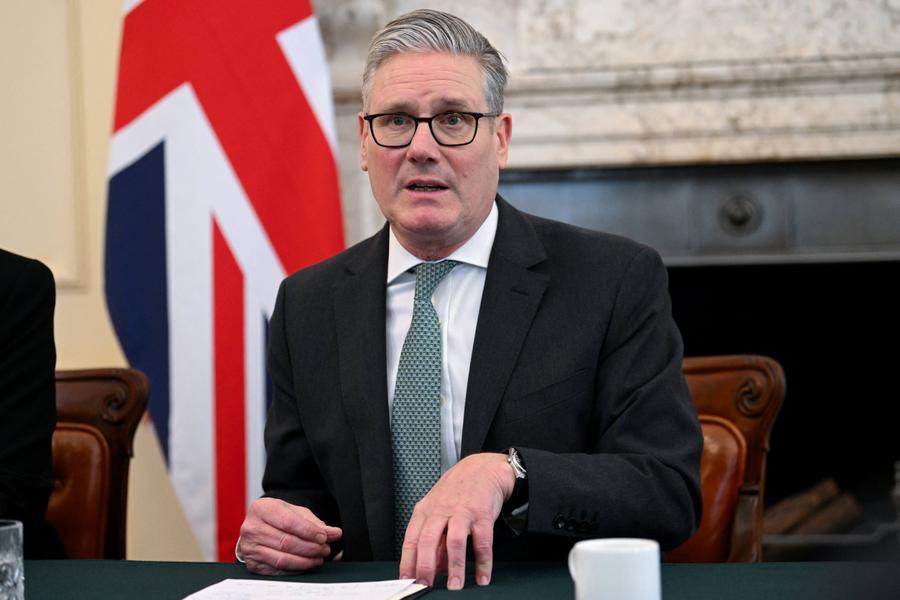
Britain Pursues Diplomatic Route
Instead of joining US forces in restricting Iranian shipping, the UK government is attempting to build an international coalition aimed at safeguarding freedom of navigation in the Gulf.
Officials confirmed that British minesweepers and defence systems remain deployed in the region, though Starmer declined to outline specific operational plans.
“What we’ve been doing is bringing countries together to keep the straits open and not shut,” he said after returning from meetings with Gulf leaders, many of whom have warned of the economic damage a prolonged disruption could cause.
The Government has also been coordinating closely with Emmanuel Macron, as London and Paris attempt to assemble a broader international coalition capable of protecting maritime trade routes.

A Strategic Waterway Under Threat
The Strait of Hormuz is one of the most strategically vital shipping routes in the world, carrying roughly one fifth of global oil and liquefied natural gas supplies.
Its closure would have immediate consequences for energy markets — a reality already reflected in the sharp rise in global oil prices following Washington’s announcement.
Brent crude surged above $100 per barrel after the blockade was confirmed.
Washington announced the move after peace negotiations between the United States and Iran collapsed in Islamabad, prompting Trump to declare that US forces would block vessels entering or leaving Iranian ports.
Economic Fallout at Home
For Starmer’s government, the immediate concern is the impact on the British public.
The Prime Minister warned that escalating tensions in the Gulf could translate directly into higher fuel and energy costs for ordinary households.
His administration has therefore ruled out any direct British military involvement in enforcing the blockade.
Instead, the UK is pressing ahead with diplomatic efforts to restore open access to the strait and stabilise global energy markets.
“We want the Strait fully open,” Starmer insisted.
With tensions between Washington and Tehran escalating, Britain now finds itself walking a delicate diplomatic line — balancing its longstanding alliance with the United States against the economic risks of a widening Middle East conflict.


